
A quick preface:
I didn’t have a tripod with me for the 2 days in Chernobyl and as a result, the image quality of a lot of the photos from inside buildings aren’t as crisp as I would have liked.
I had to crank up the ISO dramatically or shoot with a very fast shutter speed (and increase the exposure in post-production).
In saying that, I’m pretty happy with the photos that I managed to capture along with the colour grading to represent the whole experience and what happened here.
======================================
Most people at this stage will know what happened at Chernobyl, but for those of you that don’t, here’s a super quick recap:
On the 26th April, 1986, the Chernobyl nuclear reactor 4 (situated in northern Ukraine) exploded. It has left more the 56,000 square kilometers in 19 regions throughout Ukraine and Belarus contaminated. To this day, there have been almost 7 million lives affected. The fallout from the disaster has caused uncountable human and environmental devastation.
If you would like a more in-depth account of our time in Chernobyl, then check out this link: 2-day tour in the Chernobyl exclusion zone.

Hanna Zavorotnya, who is also known as “Baba Hanna”. She was one of the women who starred in the documentary – The Babushkas of Chernobyl.

The unused ferris wheel in Pripyat has become one of the most iconic symbols of the Chernobyl disaster.
The amusement park was due to be opened on May 1st 1986, just 4 days after the disaster

One of the few abandoned apartment blocks in Pripyat where you go get a rooftop pano of the entire deserted city. The new safe containment covering reactor 4 can be seen in the distance.

Nature has taken back the city after 33 years of human inactivity.

At 300 meters, this is the closest most tourists are able to get to ground zero.

A bedroom with some shoes and clothes items on the bed.

Walking through one of the countless abandoned villages in Chernobyl.

The postcard behind the shoes dates back to 1979.

Looking into someone’s living room.

One of the two kindergartens that we visited in Pripyat.

This room was one of the most haunting places we visited. You couldn’t help but think of the children that were once put to sleep in these wrecked bunk beds.

Hard to believe that most of these toys were dropped by children who are now fully grown adults.

The cooling tower for reactor 5 & 6.

Inside the cooling tower.

Deep in the forests around Chernobyl lies the Duga radar, a huge and mysterious Soviet installation built at the height of the Cold War.

Inside the building behind the Duga radar tower.


The city has been deemed inhabitable for the next 20,000 years.

Inside an abandoned bus that’s used frequently by Chernobyl S.T.A.L.K.E.R.S.


A mix of books and a teacher’s belongings in the highschool.


The amusement park – these bumping cars, along with the ferris wheel has become iconic in the Chernobyl disaster.


The remains of a hotel in Pripyat.


The entrance sign to Pripyat; the city that was built to house the plant workers and their families. It had close to 50,000 residents at the time of evacuation.
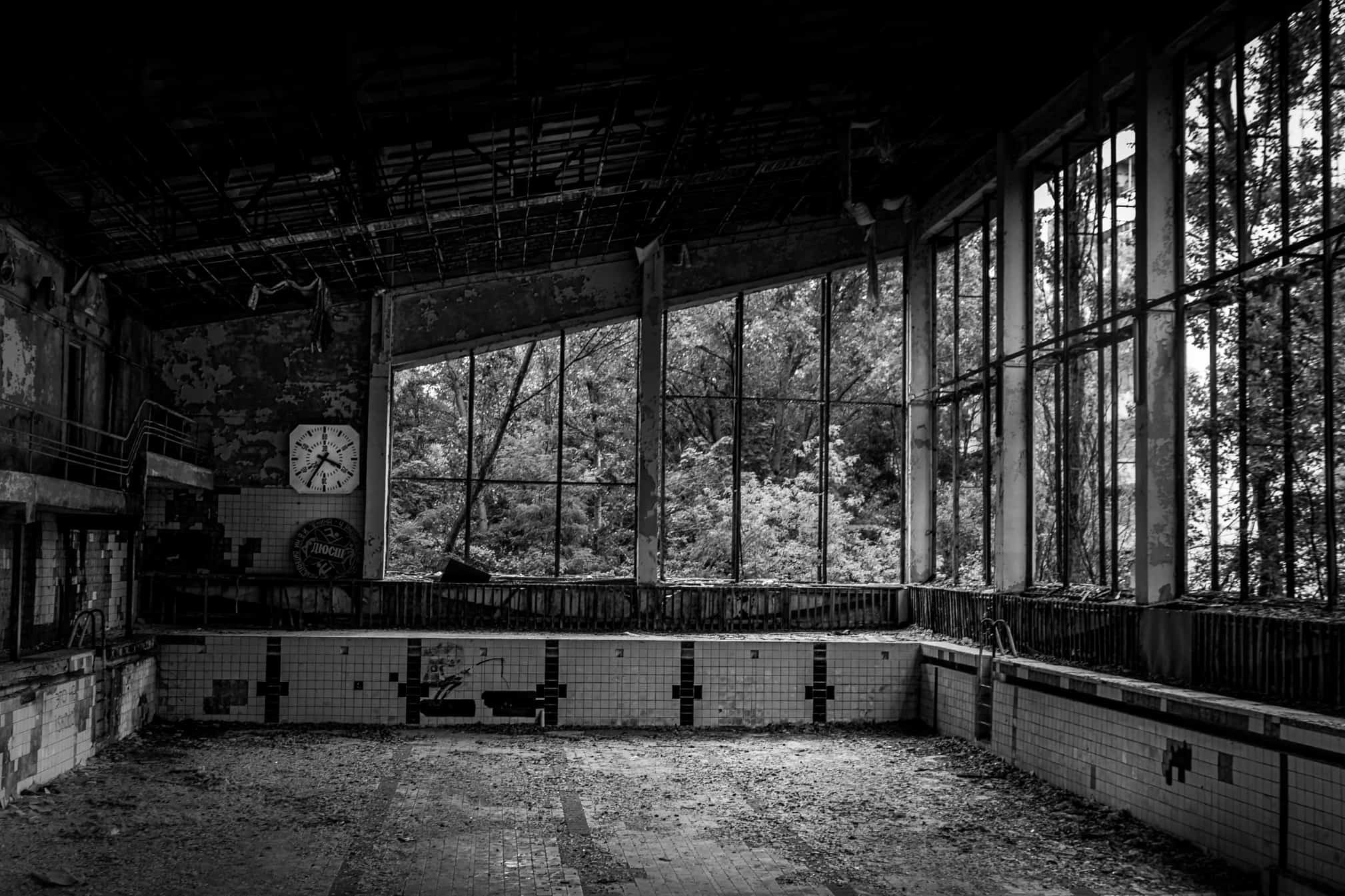
This swimming pool was in use right up to 1996 by the liquidators and those working in Chernobyl in the aftermath of the disaster.

One of the main streets in Pripyat that had two lanes of traffic – it’s now overgrown and looking grim.

A pupil’s handwriting copy that dates back to 1986.

Suggested Posts;

Alive – The Andes Plane Crash Museum
While we were in Montevideo, Uruguay, we heard that the Andes plane crash museum - "Museo Andes" was the number one attraction in the city according to TripAdvisor. You may know of the crash better from the hollywood film - Alive! Here's a quick account of what...
Relaxing in luxury at the Milord Hotel in Encarnacion
We decided to spend a few more days in Encarnacion as exploring the Jesuit Ruins, the least visited UNESCO world heritage site in the world, was something that we wanted to do. For those of you that read our blog regularly or know us personally, you will know that we...
The Maitei Apart Hotel, Encarnacion
We arrived into Encarnacion on the Argentinean border after an 8 hour bus journey from Asuncion. Tired and hungry, we wanted somewhere to rest up for a day or two and complete some online tasks that had to be cleared out. We heard of a really cool hotel online that...

Travel Tales with SJ from ChasingTheDonkey.com
This weeks Travel Tales Interview is with SJ from ChasingTheDonkey.com. She and her husband have made Croatia their home, so if you're thinking of visiting Croatia anytime soon, then give her blog a peak. Read on to check out her interview...... Tell us where you're...